

Singing together sounds like the simplest thing in the world. It is not. The hard part was never the singing — it was the together. Two voices, one note, landing at the same instant: that is a coordination problem that predates notation, and every musical community on earth has had to solve it.
Here is the strange part. They all solved it the same way. And few know it.
Walk into a megachurch sound booth, a jazz basement, a synagogue, a barbershop chapter, and a Hindustani vocal lesson, and you’ll find five communities who would swear they have nothing in common. But each one has quietly built the same thing: a fixed, external reference that everyone agrees to follow, so that staying together stops depending on being in the same room. We call ours a backing track. They have a dozen names for it. It is one idea.
Let me show you the map no one has drawn before.
The ones who buy the track
The most industrialized corner of this world is contemporary worship. A modern praise team doesn’t gather around a piano and hope; it buys a backing track — and not just one kind. There are full-band tracks, stripped-down rhythm tracks, click tracks that feed only the drummer’s in-ear, and “split tracks” with a guide vocal on one channel that you learn from during the week and pan away on Sunday. Companies like MultiTracks, PraiseCharts, and Loop Community have turned this into a catalog with thousands of titles. The worship world didn’t stumble into backing tracks. It built an economy on them.
Gospel and Black church music run a parallel system — Daywind alone sells more than five thousand accompaniment tracks, most offered with and without background vocals, so a soloist can lean on the harmony or carry it alone. And then there’s karaoke, the most democratized version of all: Sunfly, KaraFun, and their many rivals. Here’s the twist most people never notice — those aren’t the original recordings. They’re re-recorded soundalikes, built note by note “in the style of” the hit. A whole industry exists to make a reference track that feels like the song without being the song.
The ones who render the score
Choirs took a different road, because choral music starts on the page. The classical and sacred repertoire lives in enormous free libraries — the Choral Public Domain Library hosts more than fifty thousand works, and IMSLP holds the instrumental canon. But a score is silent. So singers turned it into sound: services like ChoraLine and CyberBass take a choral work and generate a part-dominant rehearsal recording, your voice line pushed forward so you can learn the alto part in the car. No accompaniment, no beauty, just pitch and rhythm, dead accurate. Note-bashing, the British choirs call it.
School music does the same with a polish. SmartMusic — the descendant of the old Music Minus One records — gives a student a polished accompaniment that waits, follows, and then grades how close they came. The reference isn’t just something to follow anymore. It’s something that listens back.
The ones who feed the changes
Jazz refused the fixed track entirely, and that refusal is itself revealing. A jazz musician doesn’t want a recording; they want changes. So they feed chord symbols into iReal Pro or Band-in-a-Box, and the software conjures a rhythm section in any key, any tempo, as many choruses as you need. For half a century before the apps, Jamey Aebersold pressed records of real rhythm sections playing standards with one instrument left out — play-alongs that let a kid in Ohio trade fours with a band that wasn’t there. Blues works the same way, built on twelve bars everyone already knows. The reference here isn’t a song. It’s a structure — and the structure is enough.
The ones who hold the drone, or pass it by ear
Now it gets beautiful. In Indian classical music, the reference is a drone. A tanpura sounds the tonic and never stops, and over that unbroken Sa the singer builds a raga that can wander for an hour and always know where home is. Add a tabla cycle for time, and you have a complete reference — tone and pulse — with no melody and no score at all. Today it comes from an app: iTablaPro, iShala, a synthesized drone in your pocket. A five-hundred-year-old practice, now running on a phone.
Folk music sits at the opposite pole, and it is the exception that proves the rule. The session tradition is aural; you learn the tune by ear, in the room, from whoever’s leading. The famous folk songbooks — Rise Up Singing, the session tunebooks — print the chords and the words and deliberately leave out the melody, because you’re supposed to already know it. Which means the folk singer who wants to sing with someone far away has nothing. No track, no part recording, often not even notation. Just the expectation that you both already carry the tune.
Liturgical traditions live somewhere in between. A cantor learns nusach — the melodic grammar of the service — partly by ear and partly from the cantorial recordings archived by groups like the American Conference of Cantors. Much of the most sacred material isn’t sung at all but chanted or spoken in unison, which is its own coordination problem, and a harder one. Which brings us back to the Mourner’s Kaddish, and why it had nothing to hold onto.
The ones who learn their line
One last community, and it’s the one that sits closest to home. Barbershop singers learn from part-predominant tracks the Barbershop Harmony Society publishes — a recording for each of the four voices, so a lead or a bass can master their line alone and arrive ready to lock in. That is, almost exactly, what a remote ensemble needs: every part recorded separately, then assembled into a whole. The a cappella world does the same with its arrangements. They’ve been quietly running the future for years.
The same move, everywhere
Step back and the map resolves into a single shape. The worship team’s split track, the choir’s note-bashing recording, the jazz player’s chord chart, the tanpura’s drone, the barbershop learning track — these are not five solutions. They are one solution wearing five costumes. In every case, a community took a coordination problem that seemed to require everyone in the same room at the same instant, and replaced it with a shared external reference that each person follows on their own. Get the reference right, and the togetherness takes care of itself.
That is the whole idea behind Lyrekos. Not a new trick — the oldest one there is, finally pointed at the internet. If everyone is locked to the same reference, it no longer matters that the network is slow, or that the singers are ten time zones apart. The tanpura player and the worship drummer with the click in his ear already knew this. They just never compared notes.
We did the comparing. The drone and the click track turn out to be the same prayer, five centuries apart — and so, it turns out, was the Kaddish. It didn’t fail because the technology was too weak. It failed because no one had given those mourners a reference to hold. Whatever your tradition hands you to sing along with, the principle underneath is identical. That’s not a coincidence. That’s the architecture of singing together, and it has been hiding in plain sight the entire time.
Curious which kind of reference fits your music — and what you’re actually allowed to use? That’s the next post. In the meantime, Try it — sing together, wherever your voices are.
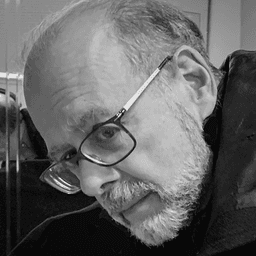
Lance Glasser
Lance is CEO and Co-founder of Kinetic Audio Innovations. He was previously a faculty member at MIT, Director of the Electronics Technology Office at DARPA, and CTO at KLA. He also makes sculpture, which has nothing to do with audio but explains the hundreds of pounds of bronze in his house.
Sing in Sync, Anywhere
Join our Lyrekos community and be among the first to perform together across distance — on whatever reference your tradition already trusts.
Join our CommunityTry it